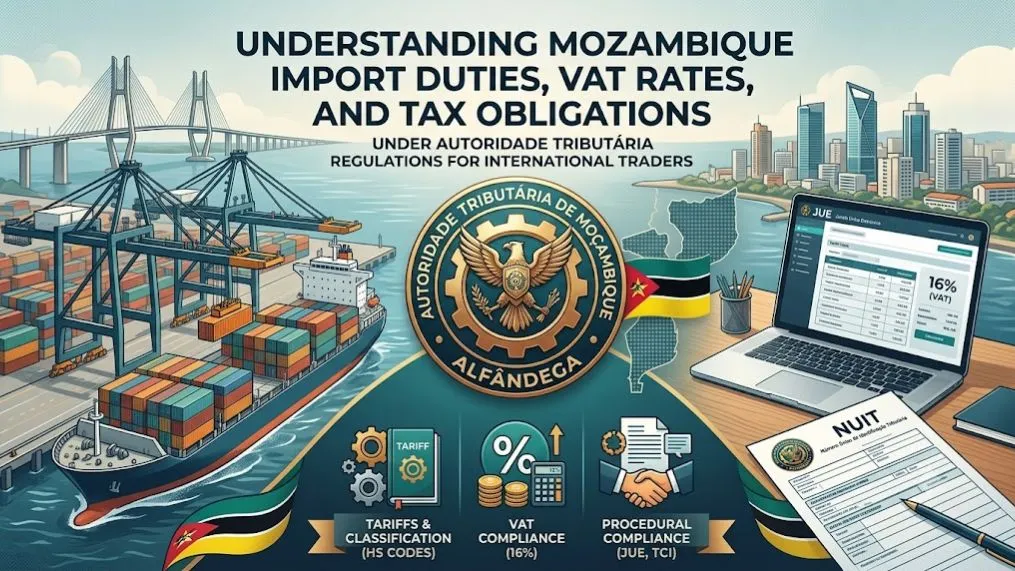
Navigating cross-border trade requires a firm grasp of local customs frameworks, tax structures, and regulatory landscapes. For international businesses targeting southeastern Africa, Mozambique represents a strategic entry point, but its fiscal architecture requires careful planning. The country’s customs and tax administration, the Autoridade Tributária de Moçambique (AT), enforces a comprehensive set of rules governing import duties, consumption taxes, and strict compliance timelines. Failing to align with these regulatory expectations can result in severe clearance delays, heavy financial penalties, and the potential seizure of commercial cargo.
Recent legislative updates have modernized the Mozambican tax environment, specifically targeting the digital economy and refining customs exemptions. Understanding how these structural updates interact with long-standing tariff classifications is the first step toward building a predictable, compliant supply chain into the country.
The Mozambican Tariff Framework and Import Duties
Mozambique operates on a multi-tiered import duty structure based on the Harmonized System (HS) of tariff classification. Customs duties are primarily ad valorem, meaning they are calculated as a percentage of the Cost, Insurance, and Freight (CIF) value of the imported goods. The Autoridade Tributária categorizes imports into distinct classes to balance local industrial protection with the need for essential foreign commodities.
Trusted by vessels calling at Mozambican ports. From provisions to engine parts — everything your crew needs, delivered on time.
Essential goods, primary raw materials, and specific capital equipment often benefit from minimal taxation, frequently qualifying for a 0% or 5% duty rate. Intermediate goods and parts typically attract a mid-range tariff of 7.5% to 10%. Conversely, consumer goods, finished products, and luxury items face the highest standard tariff tier, which tops out at 25%. On average, international traders experience a trade-weighted tariff rate hovering around 7.1%.
Importers must also account for specialized consumption taxes. The Specific Consumption Tax (Imposto sobre Consumos Específicos) targets luxury commodities, vehicles, tobacco, and alcoholic beverages. These excise rates can be substantial, with tobacco products facing duties up to 75%, and specific recreational crafts or premium apparel drawing extra liabilities between 25% and 30%. Furthermore, recent amendments to the Customs Tariff alter instructions regarding state-backed projects and travellers' allowances, emphasizing that the AT is progressively tightening its assessment mechanisms.
Regional trade agreements play an immense role in modifying these structural costs. As part of the Southern African Development Community (SADC) and the evolving African Continental Free Trade Area (AfCFTA), Mozambique is steadily executing tariff dismantling schedules. Goods that possess verifiable certificates of origin from participating African member states can access significantly reduced or entirely eliminated customs duties, shifting the financial calculus in favor of regional procurement.
The Mechanics of Value-Added Tax (VAT) on Imports
Beyond standard customs tariffs, almost all commercial imports entering Mozambican territory are subject to Value-Added Tax (VAT). The standard VAT rate in Mozambique is 16%. This indirect tax applies directly to the landed cost of the product, which is determined by combining the CIF value with the calculated import duties and any secondary customs clearance fees.
While the 16% rate remains the default benchmark, specific exceptions exist within the Mozambican VAT Code. A reduced rate of 5% applies to selected medical and health services provided by private entities, though international traders should note that input VAT incurred under this specific 5% bracket is generally non-deductible. Complete exemptions from VAT are typically reserved for fundamental agricultural inputs, basic food staples, and goods entering under specialized customs economic regimes. These regimes include Bonded Warehouses, Industrial Free Zones (IFZs), and Special Economic Zones (SEZs), where tax liabilities are deferred or waived to incentivize domestic manufacturing and re-exportation.
A profound regulatory shift has recently transformed how international service providers and digital merchants interact with the Mozambican market. The Autoridade Tributária explicitly integrated digital goods and services into the standard VAT taxable base. Under these updated guidelines, software licensing, cloud hosting, streaming platforms, and digital intermediation are fully taxable if the purchaser or ultimate consumer is located within Mozambican territory.
To streamline the collection of revenue from non-resident entities, the state has reinforced the VAT reverse-charge mechanism. When a foreign entity supplies digital assets or cross-border services to a registered Mozambican business taxpayer, the foreign supplier is generally exempt from local tax registration. Instead, the domestic buyer must calculate, declare, and remit the 16% VAT directly to the AT. This reverse-charge rule places strict structural burdens on local buyers, as errors in transaction classification or identification can lead to the immediate forfeiture of their input VAT deduction rights.
Corporate Obligations and Withholding Requirements
International traders operating via permanent establishments or handling ongoing domestic distribution channels must integrate into the broader corporate tax ecosystem. The primary corporate income tax (Imposto sobre o Rendimento das Pessoas Colectivas, or IRPC) stands at a flat rate of 32%.
A vital component of this corporate framework is the withholding tax system, which directly affects cross-border payments. Income derived from the transfer of goods or the rendering of services via digital channels, along with commissions earned by electronic commerce or electronic money agents, is subject to a flat 10% withholding tax. The obligation to withhold this amount triggers at the exact date of cost recognition within the accounting records. Importers and multinational partners must carefully structure their contractual gross-up clauses to account for this 10% operational reduction on outbound remittances.
Simultaneously, the Autoridade Tributária has restructured its handling of domestic business classes by completely abolishing historical simplified bookkeeping and simplified taxation regimes. All entities conducting business within Mozambique, excluding very low-turnover operators below the 2.5 million MZN threshold, are now legally mandated to maintain fully organized commercial accounting structures compliant with corporate tax standards.
Strategic Compliance and Clearing Procedures
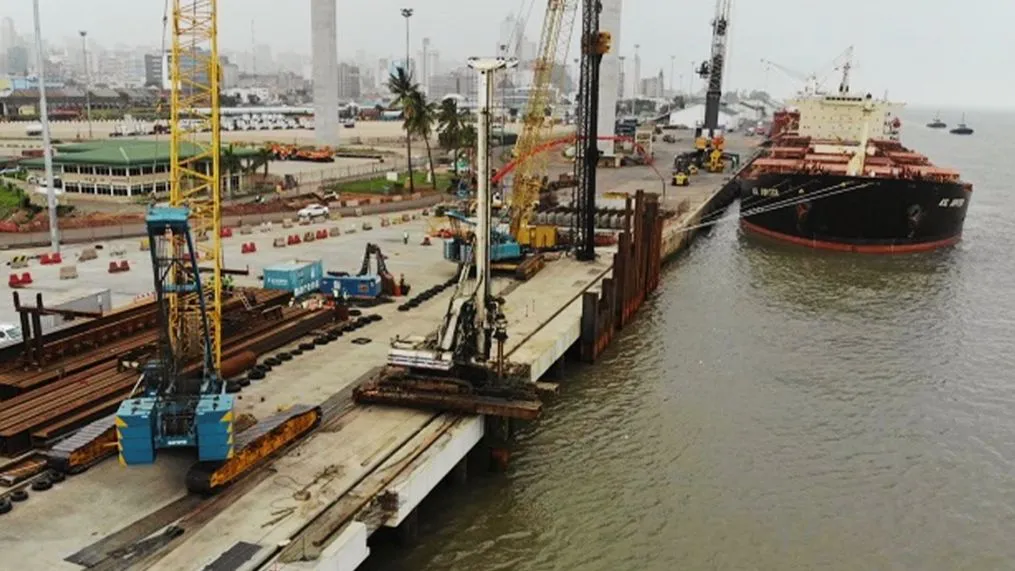
Surviving the customs clearance environment in Mozambique requires flawless documentation and strict adherence to procedural timelines. The administrative processing of cargo through major hubs, such as the Port of Maputo, demands early collaboration with licensed local customs brokers (Despachantes Aduaneiros).
Importers must compile a comprehensive documentation packet prior to the arrival of the vessel. This packet includes the original Bill of Lading or Air Waybill, a detailed Commercial Invoice detailing the exact transactional values, a Packing List, and relevant import licenses or phytosanitary certificates issued by line ministries. The Autoridade Tributária utilizes these documents to verify the accuracy of the declared HS codes and to prevent under-valuation, a primary focal point for customs audits.
The financial pressure of delays is compounded by strict regulatory timeframes. Importers should note that the AT enforces a strict 150-day deadline for processing legitimate VAT refund claims, coupled with a 10-year statute of limitations for businesses attempting to reclaim historical VAT credits. On the terminal side, port authorities offer finite "free time" windows for cargo storage before heavy daily demurrage and ground-rent penalties apply. By implementing thorough pre-clearance strategies, verifying regional trade certificates, and factoring the newer digital reverse-charge rules into corporate accounting, international traders can successfully navigate Mozambique's evolving regulatory horizon.