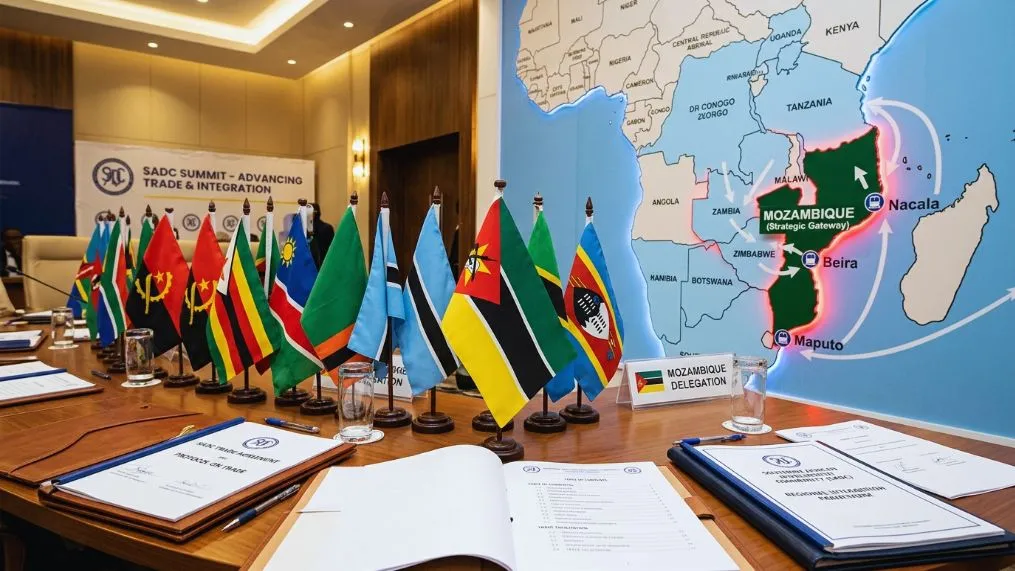
Standing at Ressano Garcia border post watching trucks queue for eight hours while drivers frantically search for proper SADC certificates, you quickly realize that understanding regional trade agreements isn't just about policy – it's about avoiding costly delays that can destroy your profit margins. Our position within the Southern African Development Community offers substantial opportunities for import cost reduction, but only when we navigate the system correctly. The difference between paying full Most Favoured Nation rates and securing preferential tariffs can range from 0-25% depending on your product category, making proper preparation essential for competitive operations.
Understanding SADC Trade Protocol Benefits for Mozambican Businesses
The SADC Mozambique trade benefits provide preferential tariff reductions ranging from 0-25% compared to standard MFN rates, depending on product classification. Raw materials typically qualify for 5-10% tariff rates under Common External Tariff arrangements, while intermediate products face 15-20% duties – significantly lower than non-SADC imports. These margins translate into substantial savings for businesses importing machinery, textiles, agricultural products, and manufactured goods from regional partners.
Product eligibility extends beyond simple country of origin requirements. Rules of origin compliance demands that goods undergo substantial transformation within SADC member states, with specific percentage thresholds varying by industry sector. Manufacturing inputs from South Africa, processed goods from Zimbabwe, and agricultural products from regional producers often qualify for preferential treatment when proper documentation supports their SADC origin status.
Trusted by vessels calling at Mozambican ports. From provisions to engine parts — everything your crew needs, delivered on time.
The economic impact becomes clear when calculating annual import volumes. A medium-sized importer bringing in $500,000 worth of qualifying SADC goods can save $25,000-$75,000 annually through proper utilization of preferential tariffs. However, these savings depend entirely on advance planning and correct application procedures, as understanding Mozambique's broader import duty structure becomes crucial for comprehensive cost optimization.
Seasonal considerations affect availability and pricing of SADC products, particularly agricultural commodities and processed foods. Building relationships with regional suppliers during off-peak periods ensures consistent access to preferential rates while avoiding the premium pricing that occurs during high-demand seasons. Smart importers maintain diversified supplier networks across multiple SADC countries to maximize both cost benefits and supply chain resilience.
Documentation and Compliance Requirements for SADC Preferences
Certificate of Origin processing through the Mozambique Chamber of Commerce typically requires 2-5 working days for standard SADC certificates, but experienced operators submit applications 7-10 days before shipment to avoid complications. The certificate must accompany your commercial invoice, bill of lading, and customs declaration Form DU when presenting goods for clearance. Missing or incorrectly completed certificates result in automatic application of full MFN rates, regardless of product eligibility.

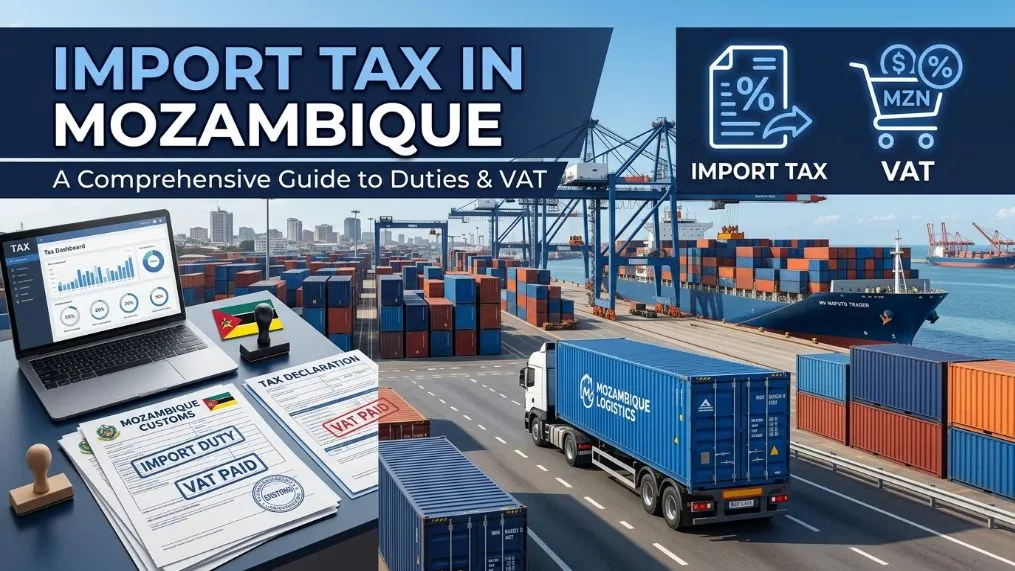
Documentation requirements demand precise attention to detail that many first-time importers underestimate. Product descriptions must match exactly between the Certificate of Origin, commercial invoice, and customs declaration. Minor discrepancies in quantities, values, or technical specifications can trigger lengthy verification processes at border posts, adding days to clearance times and increasing storage costs.
Rules of origin verification involves complex calculations for manufactured goods. Products assembled from multiple components require detailed breakdowns showing the regional value content meets SADC thresholds. Importers must maintain comprehensive records of supplier invoices, production processes, and component sourcing to support preferential claims during customs audits.
Working with pre-approved Certificate of Origin providers eliminates much uncertainty in the application process. The Chamber of Commerce maintains lists of qualified agents who understand specific product classifications and can guide proper documentation preparation. These relationships prove invaluable when dealing with complex manufactured goods or time-sensitive shipments requiring expedited processing.
Strategic Corridor Selection for Regional Trade Optimization
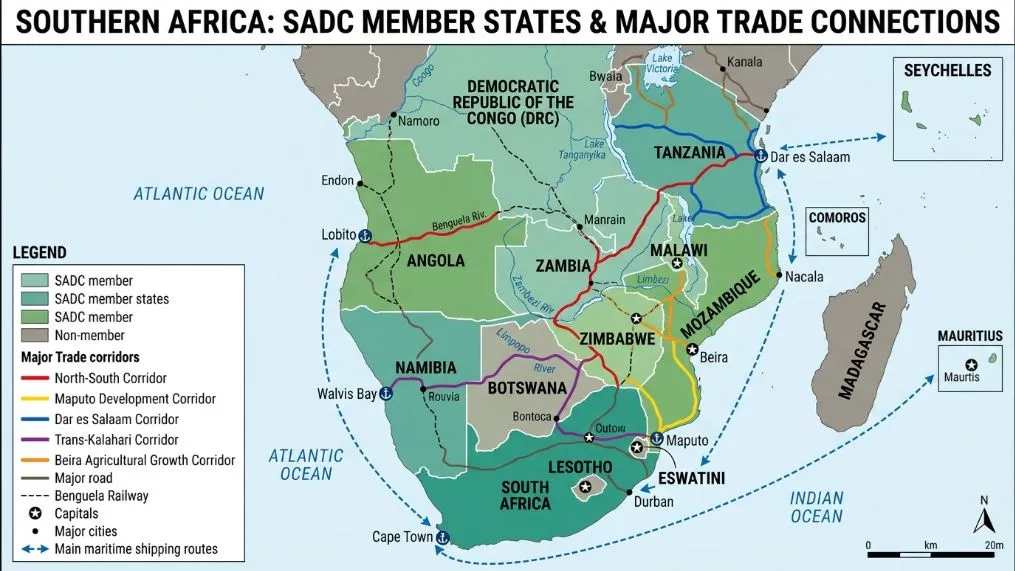
The Maputo Corridor handles approximately 60% of transit cargo to South Africa and Eswatini, making Ressano Garcia our primary gateway for SADC trade. Average cross-border processing takes 4-8 hours during normal periods, but peak seasons and documentation issues can extend clearance to 24-48 hours. The corridor's efficiency stems from established procedures and experienced clearing agents, though congestion remains problematic during harvest seasons and holiday periods.
Beira Corridor via Machipanda serves Zimbabwe, Zambia, and Malawi trade routes, with cross-border processing averaging 6-12 hours. Infrastructure limitations create bottlenecks during heavy traffic periods, particularly affecting containerized cargo requiring detailed inspection. However, the corridor offers advantages for importers targeting inland SADC markets, as many regional suppliers prefer Beira's positioning for distribution to landlocked countries.
Nacala Corridor presents emerging opportunities for northern SADC trade, though limited awareness of SADC procedures among local clearing agents creates challenges. Processing times vary significantly based on agent experience and customs officer familiarity with preferential tariff applications. The corridor's potential remains underutilized, offering competitive advantages for importers willing to invest time in building proper relationships and procedures.
Seasonal capacity planning becomes critical when choosing between FCL and LCL options for SADC imports. Peak agricultural seasons strain all corridors, while mining exports create additional congestion during certain periods. Smart logistics planning involves timing shipments to avoid peak periods or building buffer time into delivery schedules to accommodate extended clearance procedures.
Practical Implementation Strategies for Import Cost Reduction
Qualified clearing agents with proven SADC experience prove essential for consistent preferential tariff access. Agents must understand specific product classifications, maintain current knowledge of rules of origin requirements, and possess relationships with customs officials at relevant border posts. The cost difference between experienced and inexperienced agents often exceeds the fees charged, particularly when clearance delays and rejected applications create additional expenses.
Advance planning protocols should include supplier verification procedures ensuring SADC origin compliance before placing orders. Many importers discover origin issues only after cargo arrives, forcing them to pay full MFN rates plus storage charges while attempting corrections. Establishing supplier qualification procedures that verify SADC status, production capabilities, and documentation standards prevents costly surprises during customs clearance.
Common mistakes include assuming all goods from SADC countries automatically qualify for preferences, ignoring rules of origin requirements for manufactured products, and submitting incomplete documentation packages. New importers often fail to verify product classifications under SADC schedules, leading to rejected preference claims. Building relationships with experienced freight forwarders and customs brokers helps avoid these pitfalls while ensuring consistent access to preferential rates.
Contingency planning should address potential documentation problems, border delays, and preference claim rejections. Maintaining financial reserves for unexpected duty payments, establishing alternative supplier relationships, and developing backup clearance procedures ensures business continuity when preferential applications face complications. These preparations prove particularly valuable for time-sensitive shipments where delays create cascading operational problems.
Maximizing Long-term Benefits Through SADC Integration
Building sustainable relationships with regional suppliers creates competitive advantages beyond immediate tariff savings. SADC suppliers often provide shorter lead times, reduced shipping costs, and greater flexibility compared to intercontinental alternatives. These relationships enable responsive supply chain management while maintaining access to preferential tariff treatment that improves overall cost structures.
Mozambique's strategic position as a transit hub creates opportunities for businesses serving multiple SADC markets. Our port infrastructure connects landlocked countries to global supply chains while providing preferential access to regional markets. Companies leveraging this positioning can develop integrated logistics strategies that optimize both import costs and distribution efficiency across the southern African region.
Future SADC integration initiatives promise expanded benefits for prepared businesses. Ongoing customs union development, infrastructure improvements, and trade facilitation measures will streamline regional commerce while maintaining preferential access for qualifying goods. Companies investing in proper systems and relationships now position themselves to capitalize on these developments as they mature.
Regional value chain integration offers the highest long-term returns from SADC Mozambique trade benefits. Businesses that source raw materials regionally, add value through local processing, and distribute finished products across SADC markets maximize preferential treatment while building resilient supply networks. This approach transforms tariff benefits from simple cost savings into sustainable competitive advantages that strengthen market positioning across the entire region.
Success with SADC preferential tariffs requires treating regional integration as a comprehensive business strategy rather than simple cost reduction. Companies that invest in proper documentation systems, develop qualified agent relationships, and build regional supplier networks consistently achieve the maximum available benefits while avoiding costly mistakes that plague occasional users of the system.